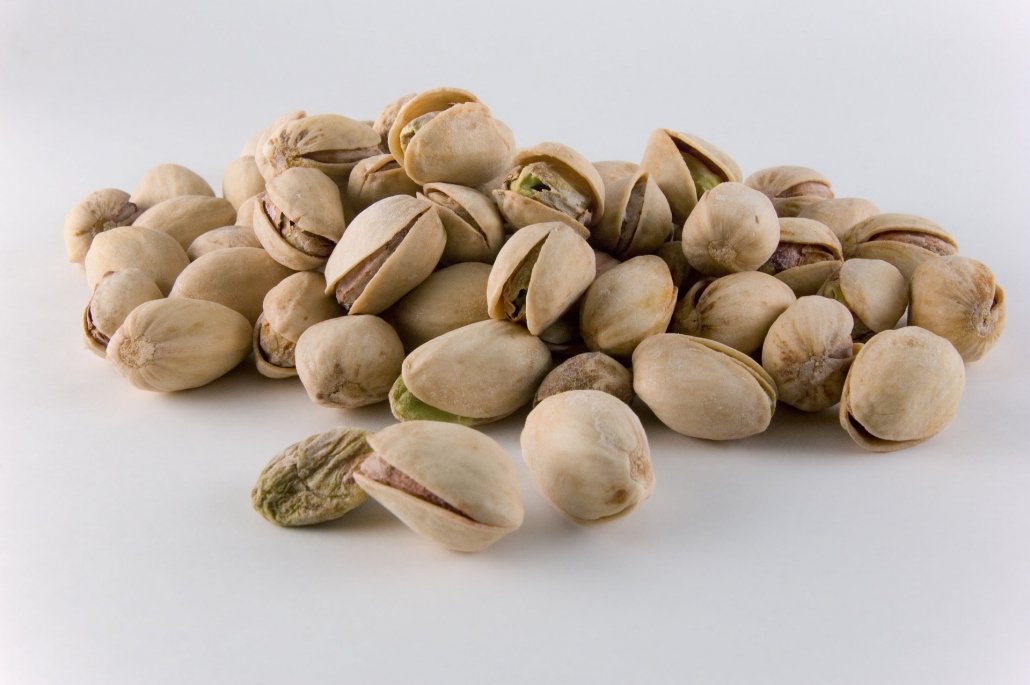

The increase in China’s customs tariff on pistachios, transportation obstacles, the lack of water resources and the increase in cultivated area, the decrease in the world price of pistachios, all threaten the American pistachio market in 2023.
However, given the decline in almond and walnut profits, pistachio growers are optimistic about the government’s current crop outlook. More rainfall this season has eased a multi-year drought by improving water allocation for farms. The colder winter has also provided suitable cold hours for pistachio trees to produce flowers and fruits. With more pistachio trees coming into harvest this year, it looks like growers could reach a record 1.2 billion pounds (more than 544,000 tons) production, according to Richard Matoian, president of the American Pistachio Growers Association.
At the association’s annual conference in Carlsbad last week, He shared his thoughts on the state of the industry and the concerns of farmers.
“On the face of it, the outlook looks positive,” he said, though he cautioned that “a lot can happen and in the past there has been a big difference between what we believed and where we ended up.”
On the other hand, there is less inventory this year due to a smaller crop than in 2022, when production reached more than 398,000 tons. The year 2022 was considered an “off” year in the alternating tree fertility cycle, and was preceded by two previous high-yielding crops, which reached more than 453,000 tons, and the record of 2021 crop was more than 520,000 tons.
After two years of port congestion that led to delays and diversion of agricultural export shipments, Matoian noted that these problems have largely been resolved. He said the quality of U.S. pistachios remains a “major selling point around the world,” as are the nut’s health benefits. He added that pistachio marketers are still facing a wave of consumers who are becoming more familiar with these nuts. Although port traffic has improved, not all shipping problems have been resolved, Matouian said. Any supply chain problem can put pressure on access to pesticides, fertilizers, and other materials and harm pistachio production and sales.
However, other challenges remain on the business front. Retaliatory tariffs in China stemming from the Trump-era trade war continue to push up US pistachio prices. A strong dollar has added to this mess and made this product more expensive. The possibility of a worldwide recession could also further dampen sales, Matoian said.
Even with the potential for a record crop this year, Bikram Hundal, a pistachio grower and horticulturist with orchards in Tulare, Kings and Madera counties, said he’s not worried about finding markets for the nuts, provided transportation problems don’t return. “That was the factor that really hurt the overall sales of all tree nuts,” said Hundal, who also grows and processes almonds.
According to him, if farmers produce more than 450,000 tons this year, the pistachio product will not compete with the government’s almond production, which has reached more than 1,360,000 tons. The price of almonds has fallen sharply in recent years, making these nuts unprofitable for many farmers. Hundal noted: The price of pistachios has been maintained though.
From September 2022 to January 2023, total pistachio shipments increased by 1.9 percent year-on-year, Matoian said. Although domestic shipments fell by 2.4 percent, exports rose by 3.9 percent. Those numbers are positive, he said, “especially when you think about commodities and other issues.”
This would help reduce the current world production of pistachios by around 10%. Matoian noted that production in Iran – the world’s second producer and the main rival of the United States – has become “more erratic” in recent years. He said, like California, the Middle Eastern country is also plagued by drought, which has caused the loss of 20,000 to 40,000 hectares per year.
With Chinese tariffs on U.S. pistachios, Iran – which has no tariffs on pistachios going to China – has taken over the market and become its largest supplier, Matoian said. Meanwhile, US pistachio exports to China fell 21.5 percent. Some of the lost sales were balanced by growth in the European Union, the top destination for US pistachios. Matoian noted that exports to the European Union increased by 9.2 percent.
A potential risk to California pistachio growers is “the enormous amount of new acres that are coming into production,” Matoian said. Between 2020 and 2022, the states cultivated area increased by 20 percent, from 371,386 to 446,000 hectares. While it took 40 years for production to reach 450,000 tons, he said he expects it to reach about 900,000 tons in the next 10 years.
“What effects all this acreage and more growth will have on the industry remains to be seen,” he said. There’s an argument to be made that consumers want our product and we’ll be fine. But there’s another argument that there’s going to be a lot on the market.”
Madera County grower Chris Wylie calls the growth numbers “scary.” He said he worries the race to add new fields is slowing. He also grows almonds and has seen how prices have reacted to the increase in cultivated area. He said he wondered at what point the price of pistachios would drop by the same amount. But he noted that pistachio traders and nut processors tell him the market could have a 900,000-tonne crop “and still be good.”.
“I hope they’re right,” Wylie said. Although I am worried
Thom Dille, CEO of Little Creek Inc., which grows pistachios in Kern County, said pistachio prices are down now. He noted that in 2020, the base price was previously $1.85 per pound, and this year it is $1.38.
Meanwhile, his production costs have more than doubled in 10 years. In 2010, it cost $1.2 million to produce this product. In 2020, his expenses increased to $2.5 million, most of which were related to water. With the drought and no water being delivered to the fields, he was forced to buy water on the open market at about $1,000 per acre foot. This compares to the normal rate of $220 per acre foot in Kern County.
In planning to limit groundwater pumping, Dille said the company purchased an old almond orchard that it operated so it could use the property’s water allocation for its pistachios. All this adds to the cost of nut production. As the cost of labor, chemicals and other inputs increases, this is starting to cost pistachios, he said.
“It looks like we’re better off than Almond, but it used to be more profitable,” Dale said.
Still, Dille said he is “optimistic about a better quality crop this year on the assumption that maybe it won’t get the full water allocation but it’s better than it was 10 years ago..”