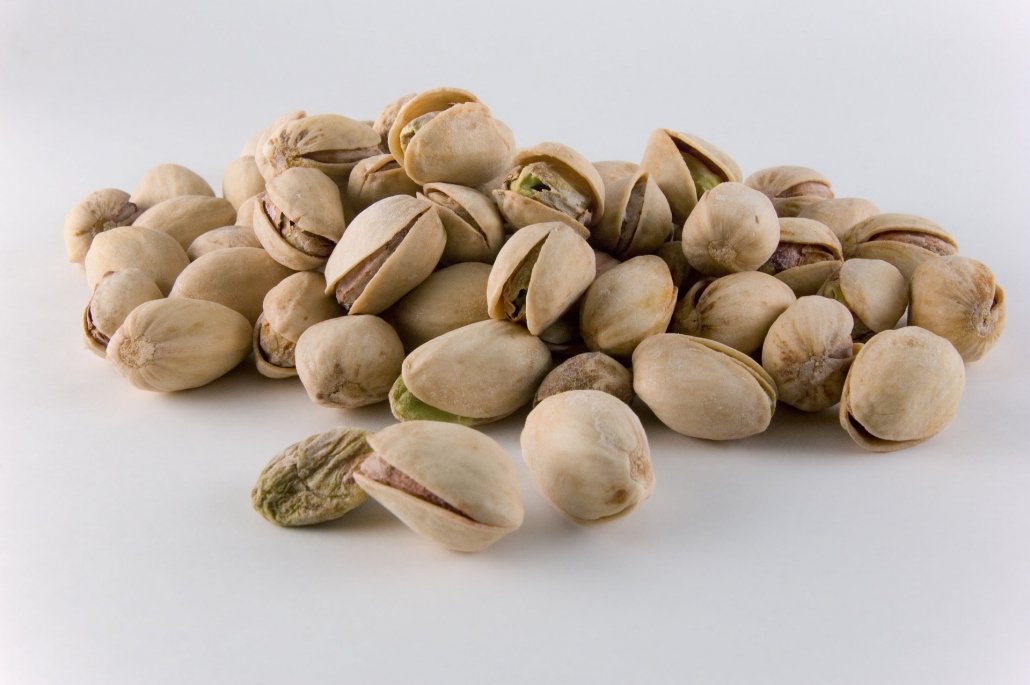

The two most important risks threatening Iran’s pistachios export to other countries are the amount of Aflatoxin and pesticide residues in this product. In this article, we will examine these two risks and the ways to deal with and reduce them in Iran’s pistachio industry.
Aflatoxin
Aflatoxin is a naturally occurring fungal toxin. The origin is Aspergillus Nomius and Aspergillus parasiticus. These fungi infect nuts such as pistachios, almonds, and peanuts as well as grains like wheat, barley, and rice. These pesticides are carcinogenic and can infect humans through contaminated dairy products and grains. Since Iranian pistachios are considered one of the most important exporting products, their health guarantee is of special importance to farmers, exporters, and consumers.
Pistachio is one of the agricultural products that need extra care. Farmers must control pistachio pests and fungi in all seasons and months. Although pistachios are covered with a hard shell and another soft shell and are not easily contaminated by pesticides and fungi, they penetrate through the cracks in shells, through water and soil, or during the preparation and drying processes.

Aflatoxin Tests in Pistachios
Testing the amount of aflatoxin is possible through several tests. These tests include HPLC, MS/LC, and ELISA. It is said that the ELISA test is better than other methods. Because this test is done at a low cost, but it is highly accurate. The test is performed with safer chemicals and is simpler than other methods. Another simple and useful method is screening tests, which are of different types. The most famous of these screening tests is Aflacard. Even consumers can easily get Aflacard kits. These kits have all the solutions and specific materials that are required for the test.
The applicable EU maximum limits for Aflatoxin for food materials are 20 ppb for Aflatoxin B1 (based on moisture content of 12 %). Complementary and complete feed 10 ppb for Aflatoxin B1 (based on a moisture content of 12 %). The percentage of aflatoxin is very important for European countries, which is why the costly preventive processes have a high impact on the final pistachio price.

Pesticides Residue Tests
Most farmers find pesticides a quick and economical way to avoid contamination. But there are two options to avoid the acute risks of pesticide use. The first option is applying approved pesticides and the second option is to grow organic crops. Organic pests or hydroponic methods take time to grow and require constant efforts. These are expensive methods. Farmers should try every possible way to produce their products with natural ingredients.
The risk of pesticides can be measured by different tests. Test methods are different. But the result should ultimately determine the dangers of pesticides. The dose level of a pesticide indicates its harmful range. The accurate result in the evaluation is yielded when samples from different types and different regions are tested.
For several years, Europe has imposed strictures on the residue of pesticides in pistachios. Because they believe that scientifically, it is not possible to reduce pesticides in pistachios, and they rather destroy the cargo in Europe and not let them return to the country of origin, to protect people’s health, if there are residual pesticides in pistachio shipments. This way of dealing with the issue has made exporters huge losses and disreputed the name of the country as defective. In addition, the presence of pesticides above the permissible limits of standards in food products causes serious problems for human health, including cancer, Alzheimer’s, heart-coronary diseases, autism, and mental retardation in children.
Carnes period or preharvest interval (PHI) is the period that must be waited after spraying before harvesting the crop so that the chemical poisons in fruits and vegetables are broken down and reach an acceptable level or limit to reduce the harm to human health. Usually, the duration is written on the label of agricultural pesticides, for example, if the shelf life of a chemical pesticide is 15 days, the crop should not be harvested for 15 days after spraying.
In some cases, farmers rush to harvest before its shelf-life expires so they get the products to the market faster, or for other reasons. In addition, sometimes they overspray than the recommended amount. Other times, the use of pesticides that does not meet the necessary standards and the inappropriate spraying method causes the risk of chemical pesticides remaining above the permitted standards in agricultural products. For any reason, the residues of pesticides in agricultural products are higher than the standard limit (MRL), and these products will face problems.
Mohammad Kazem Ramezani, a member of the Herbal Medicine Research Institute and the advisor to the Plant Protection Organization discussed the immediate need to consider the health of agricultural products regarding the problem of pesticide residues and its effect on human health and the environment at the fifth gathering of pistachio market activists. He stated that the use of agricultural inputs and pesticides in modern agriculture is inevitable. However, food safety and human health are major concerns as well. By presenting a report on the amount of pesticide consumption in different countries, he named China and South America as the biggest consumers of pesticides. He also placed the challenge of residual pesticides in agricultural products as the second priority after the pathogens.
According to a recently published report in one of the prestigious scientific journals, 64% of agricultural lands, equivalent to 24 million square kilometers, are at risk of getting polluted by more than one effective substance used in the pesticides, he claimed. Kazem Ramezani pointed out that less than one percent of the sprayed pesticides reach the target and most of it enters the environment, and the reason for this is the ineffectiveness of spraying methods and the improper use of pesticides. pesticides enter the human body usually through direct contamination of food sources, but some others first enter the soil and water and indirectly contaminate food and drinking water. Neonicotinoid poisons, such as imidacloprid, acetamide, and thiamethoxam, which were also used in pistachios orchards, were banned in the European Union in 2016 due to their transfer to pollen grains and bees. The dark age of pesticides dates back to the era of organophosphates and organochlorines.
Fortunately, the last organochlorine, “Endosulfan” was removed from agricultural procedures in Iran 12 years ago.” He adds, for the issue of residual pesticides, sometimes along with the main compound, secondary metabolites also occur. For that matter, there may be no problem with the product in Iran, but when it enters the European Union, it is declared rejected; since they measure the main composition of the poison and the secondary metabolite together. For example, in Moronto pesticide, the main ingredient is spirotetramat, which turns into spirotetramat enol as soon as it enters the pistachio. It is not a problem if we measure spirotetramat in our laboratory. While in Japan or the European Union, they measure spirotetramat plus enol spirotetramat, and if their levels are high, the cargo gets rejected. In the end, this faculty member emphasized the urge to synchronize with the standards of export destination countries and produce healthy products.
In conclusion, the differences between the methods and lack of synchronization between FDA methods of testing in different countries have caused issues in exporting various agricultural products including pistachios. As farmers and business people, we can not always rely on the slow bureaucratic systems to get along. That is why we took the initiative to solve the issue as much as we can.
At Majd Pistachios we have been using environmentally-friendly pesticides and insecticides for many years now. We do vigorously-observed procedures to make sure our pistachios are contamination and pollutants-free, and the final products are always tested by private and governmental FDA laboratories.